13X Molecular Sieve: Complete Guide
2026-07-28
Industrial gas purification, deep dehydration, and contaminant removal remain costly bottlenecks across petrochemical, air separation, medical oxygen, and natural gas processing industries. Plant operators frequently struggle with incomplete impurity removal, short adsorbent service cycles, unstable gas dew points, frequent equipment corrosion, and poor separation efficiency when selecting low-performance desiccants. Among all synthetic zeolite adsorbents, 13X Molecular Sieve (Sodium X-type Zeolite) stands out as a versatile, regenerable microporous material designed for simultaneous removal of multiple polar contaminants, solving many persistent challenges that 3A, 4A and 5A molecular sieves cannot address.
13X molecular sieve is a crystalline alkali metal aluminosilicate with FAU (faujasite) topology and an effective pore opening of 10 Å (1 nanometer). Its uniform cage structure enables selective adsorption of molecules with kinetic diameters smaller than 10 Å, including water vapor, carbon dioxide, hydrogen sulfide, mercaptans, ammonia, and light branched hydrocarbons. Unlike smaller-pore Type A molecular sieves, standard 13X zeolite can co-adsorb H₂O and CO₂ within a single adsorbent bed, making it the industry standard for air pre-purification before cryogenic separation, PSA oxygen production, and natural gas sweetening. This article explains its core characteristics, industrial use cases, typical operational pain points encountered by end-users, actionable troubleshooting, selection guidance, and regeneration best practices to help facility managers maximize uptime and reduce long-term operational expenditure.
What Is 13X Molecular Sieve? Core Structure & Adsorption Mechanism
Chemically defined as sodium-form X-type zeolite, 13X molecular sieve has the general formula: Na₈₆[(AlO₂)₈₆(SiO₂)₁₀₆]·nH₂O, CAS number 1318-02-1. The silica-alumina ratio is fixed at approximately 2.45, delivering strong polarity and high affinity toward polar gas molecules. Adsorption relies on van der Waals forces and electrostatic attraction inside interconnected microporous cavities. Molecules smaller than the 10 Å pore opening diffuse into internal voids and become trapped, while larger molecules pass through unobstructed.
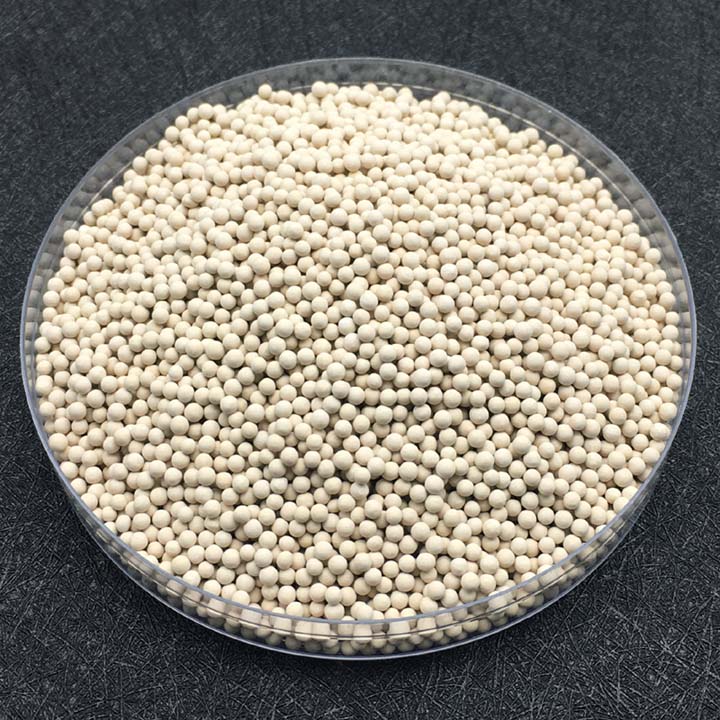
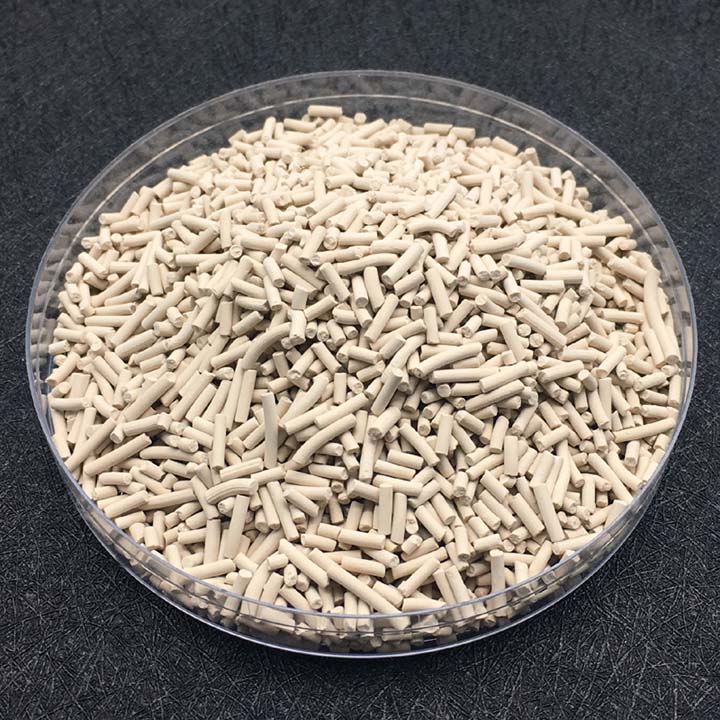
Manufacturers supply 13X molecular sieve in two mainstream physical forms: spherical beads and extruded cylindrical pellets, with standard sizes 1.6–2.5 mm, 3.0–5.0 mm. Specialized upgraded grades such as 13X APG (Air Pre-Purification Grade) and 13X-HP (High Performance for PSA oxygen) are engineered for strict cryogenic and medical oxygen environments, with higher dynamic adsorption capacity, improved crush strength, and lower dust generation.
Key baseline performance indicators for qualified industrial-grade 13X molecular sieve:
-
Static water adsorption capacity ≥ 25 wt% (25°C, saturated humidity)
-
Dynamic CO₂ adsorption ≥ 14 NL/g under standard test conditions
-
Low packaging moisture ≤1.5% (as delivered)
-
Operating temperature range: -70°C to 280°C
-
Regeneration temperature window: 180°C – 260°C
Critical advantage over competing adsorbents: Silica gel only captures moisture and cannot remove CO₂; activated carbon performs poorly for water removal; 3A/4A sieves lack sufficient pore volume to co-adsorb CO₂ once saturated with water vapor. 13X solves this multi-contaminant challenge without requiring layered multi-media beds in many projects.
Main Industrial Applications
1. Cryogenic Air Separation Unit (ASU) Pre-Purification
This is the largest consumption scenario for 13X APG molecular sieve. Before compressed feed air enters the cold box for liquefaction, residual water and CO₂ must be eliminated. If untreated, CO₂ and water freeze into solid dry ice at ultra-low temperatures, blocking heat exchangers and distillation pipelines and triggering costly unplanned shutdowns.
User pain point: Conventional adsorbent combinations fail to maintain outlet CO₂ below 0.1 ppm, leading to cold-box fouling.
Solution: Dedicated 13X APG removes moisture and carbon dioxide in one single bed, stabilizing gas purity and extending cold equipment service life.
2. PSA Oxygen Concentrators & Medical Oxygen Production
13X-HP molecular sieve selectively adsorbs nitrogen from ambient air under pressure swing adsorption cycles, enriching oxygen to 90–95% purity. Widely deployed for industrial ozone production, hospital medical oxygen supply, welding, and wastewater treatment.
User pain point: Low-quality sieve leads to dropping oxygen concentration after several months, frequent material replacement.
Solution: High-purity 13X-HP with stable nitrogen adsorption capacity and strong anti-poisoning performance.
3. Natural Gas, LPG & Refinery Gas Sweetening
Pipeline-grade natural gas requires removal of CO₂ (reduces heating value) and H₂S (causes pipeline corrosion). 13X molecular sieve simultaneously dehydrates and eliminates acidic sulfur compounds.
User pain point: Mixed streams containing heavy hydrocarbons cause rapid adsorbent coking and capacity decay.
Solution: Install pre-filters to remove heavy oil fractions and optimize regeneration purge flow to prevent irreversible carbon deposition.
4. Petrochemical & General Industrial Gas Deep Drying
Purification of hydrogen, nitrogen, ethylene, propylene and inert shielding gas for catalyst protection. Trace moisture prevents hydrolysis and premature poisoning of expensive synthesis catalysts.
5. Special Scenarios: Closed-loop CO₂ capture, refrigerant drying, laboratory gas purification, catalyst carrier
Top Pain Points When Using 13X Molecular Sieve & Professional Solutions
This section addresses the most frequently reported problems from plant engineers, a high-value segment for Google search intent (“13X molecular sieve not working”, molecular sieve short lifespan, high pressure drop).
Pain Point 1: Adsorbent bed generates excessive dust, pressure drop rises rapidly
Root causes: Low crush strength of cheap 13X material; frequent liquid water shock; improper loading and uneven flow distribution; repeated thermal cycling degradation.
Solutions:
-
Select 13X molecular sieve with crush strength above industry standard; avoid low-cost recycled powder extruded products.
-
Install high-efficiency mist eliminators upstream to prevent liquid water ingress into adsorption towers.
-
Fill adsorbent beds evenly, add top ceramic ball buffer layers to reduce fluid impact.
-
Prevent rapid temperature fluctuation during TSA regeneration.
Pain Point 2: Short service cycle, breakthrough appears far earlier than design expectation
Root causes: Incomplete regeneration; feed gas overloaded with heavy hydrocarbons, methanol or amine contaminants; excessive inlet temperature; improper switching cycle settings. Many operators only heat to 150°C, insufficient to fully desorb CO₂ trapped inside zeolite cages.
Solutions:
-
Maintain regeneration temperature at 200–240°C, ensure adequate dry purge gas flow.
-
Set pre-treatment filters to remove heavy organics that cause permanent coking.
-
Control inlet gas temperature below 45°C; adsorption capacity declines sharply above 60°C.
Pain Point 3: Cannot achieve target dew point or CO₂ removal standard
Root causes: Wrong molecular sieve grade selection; contaminated incoming gas; adsorbent partially saturated by long-term incomplete regeneration; water and hydrocarbon poisoning. A common mistake: purchasing general-purpose 13X beads for cryogenic ASU instead of specialized 13X APG grade.
Solutions:
-
Match product grade to application: Use 13X APG for air separation, 13X-HP for PSA oxygen.
-
Perform regular outlet gas monitoring; implement full thermal regeneration if capacity gradually drops.
-
Stop liquid carryover from upstream compressors.
Pain Point 4: Confusion between 13X, 4A, 5A – Wrong model selection leads to project failure
Many buyers blindly choose cheaper 5A molecular sieve for air pre-purification. While 5A removes CO₂, its small pore structure cannot handle high water load; water occupies adsorption sites and drastically cuts CO₂ capacity.
Quick selection rule:
-
Only need water removal: 3A /4A
-
Straight-chain alkane separation: 5A
-
Simultaneous H₂O + CO₂ + H₂S removal, air separation, PSA oxygen: 13X Molecular Sieve
Pain Point 5: Uncertainty about regeneration feasibility & disposal of spent molecular sieve
Users frequently ask: Can saturated 13X be reused? Yes. 13X zeolite supports hundreds of thermal swing adsorption cycles if protected from heavy contamination. However, once coked by heavy oil or irreversibly poisoned by certain heavy metal ions, regeneration cannot restore performance and the material requires proper industrial solid waste treatment.
How to Purchase High-Quality 13X Molecular Sieve: Key Buying Checklist
To avoid supplier quality gaps that damage production efficiency, buyers must verify these criteria before bulk orders:
-
Request official test reports covering static water adsorption, crush strength, attrition loss, bulk density.
-
Confirm grade differentiation: standard 13X, 13X APG, or 13X-HP according to process requirements.
-
Check packaging: Hermetically sealed moisture-proof vacuum kraft bags or steel drums. 13X rapidly absorbs ambient moisture once packaging opens, losing initial capacity.
-
Obtain MSDS documentation for factory safety compliance.
-
Ask suppliers for application technical support including loading density, recommended regeneration parameters, and bed design reference data.
Operation & Maintenance Best Practices to Extend Service Life
-
Strictly avoid direct contact with liquid water. Liquid water causes thermal shock and physical breakdown of zeolite pellets/beads.
-
After opening packaging, load into adsorption vessels immediately. Do not expose to atmospheric air for extended time.
-
Optimize cycle timing: Do not excessively extend adsorption cycle beyond design parameters.
-
Perform periodic thermal deep regeneration every 3–6 months for systems processing hydrocarbon-laden gas streams.
-
Regularly inspect upstream filters and replace filter elements on schedule.
Frequently Asked Questions
Q1: What is the difference between 13X and 13X APG molecular sieve?
A: 13X APG is upgraded air pre-purification grade. It has optimized pore structure, lower dust formation, superior dynamic CO₂ & water co-adsorption performance, specifically designed for cryogenic air separation plants. Standard 13X suits general dehydration and gas sweetening.
Q2: What regeneration temperature should I use for 13X molecular sieve?
A: Recommended temperature: 180–260°C. 220°C is optimal for removing both water and CO₂. Temperatures exceeding 300°C risk irreversible crystal framework damage.
Q3: Can 13X molecular sieve remove methane?
A: No. Methane kinetic diameter is ~3.8 Å, but 13X has low adsorption selectivity for non-polar methane. It cannot separate methane effectively.
Q4: Is 13X zeolite toxic?
A: 13X molecular sieve is chemically inert, non-toxic under normal usage. Avoid inhalation of zeolite dust during filling. Wear standard PPE during handling.
Conclusion
As global demand for industrial oxygen, clean natural gas and low-carbon gas purification technology continues rising, 13X molecular sieve remains an irreplaceable multi-functional adsorbent. Its unique capability to simultaneously capture water vapor, carbon dioxide, hydrogen sulfide and light organics solves many critical pain points that single-function desiccants cannot overcome. However, final system efficiency heavily depends on correct grade selection, standardized bed design, controlled operating conditions, and scientific regeneration routines.
Many plant operators underestimate the impact of low-quality, off-spec molecular sieve on overall production costs. Short adsorbent lifespan, unplanned equipment maintenance, unstable gas purity and energy waste far outweigh minor upfront savings on cheap adsorbent materials. By matching the proper 13X variant (standard 13X, 13X APG or 13X-HP) to your process parameters and following recommended maintenance guidelines, industrial facilities can achieve stable long-term purification performance, lower energy consumption and minimize operational downtime.
If you need customized technical data, bed loading calculation, or quotations for bulk 13X molecular sieve, contact OIM professional zeolite manufacturers to obtain process-oriented engineering support tailored to air separation, PSA oxygen, natural gas processing and chemical dehydration projects.



 Tracy Chen