
Technical article
2026-10-26
lithium molecular sieve is a specialized adsorbent material that uses lithium cations as part of its crystalline structure to selectively adsorb certain molecules. It is commonly associated with lithium-exchanged zeolites, particularly lithium-based low-silica X-type zeolites, which are widely used in pressure swing adsorption (PSA) systems for air separation and nitrogen generation.
Unlike ordinary filtration materials that remove particles through physical barriers, a lithium molecular sieve separates gas molecules through selective adsorption. Its porous crystalline structure contains regularly distributed channels and cavities, while its cations create adsorption sites that interact with specific gas molecules.
Lithium molecular sieves are especially valued for their ability to adsorb nitrogen from air, allowing oxygen to be enriched in the remaining gas stream under suitable operating conditions. This property makes them important adsorbents in pressure swing adsorption oxygen generation systems.
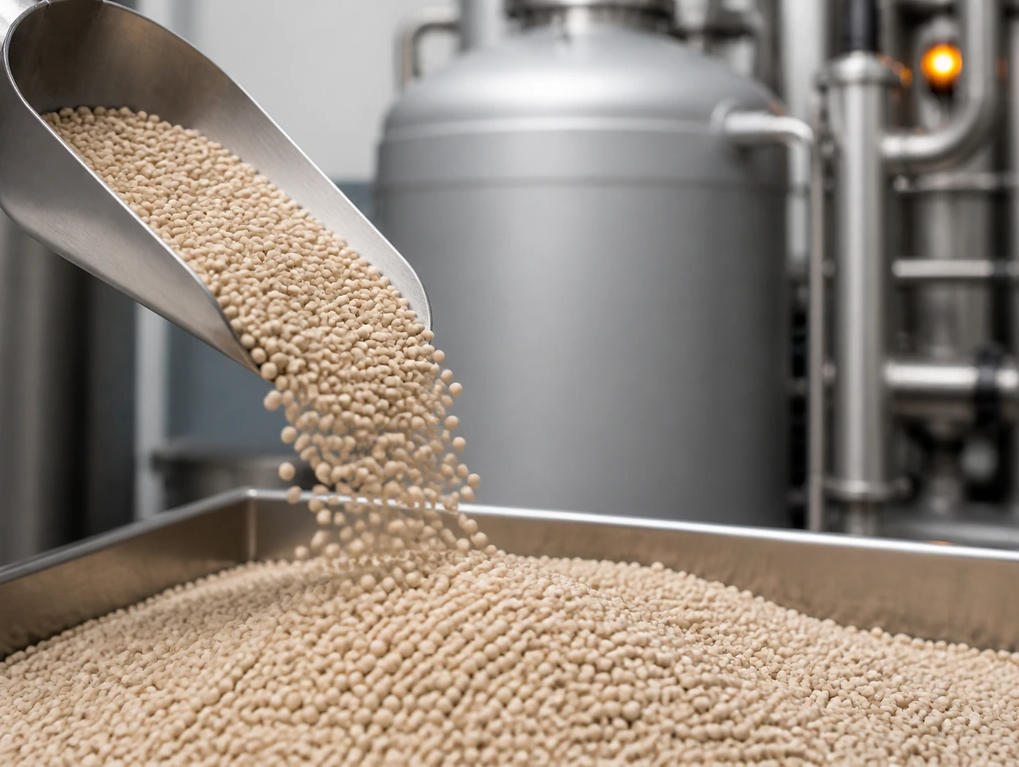
The performance of a lithium molecular sieve depends on several factors, including lithium exchange level, crystal structure, pore accessibility, particle size, moisture content, mechanical strength, and operating pressure.
In simple terms, a lithium molecular sieve is a high-performance adsorbent designed to separate gas mixtures by selectively attracting particular molecules rather than mechanically filtering them.
The main characteristics of lithium molecular sieves include:
High nitrogen adsorption capacity: Lithium-exchanged zeolites can provide strong adsorption of nitrogen under appropriate conditions.
High oxygen selectivity: They can support efficient oxygen enrichment in PSA systems by preferentially adsorbing nitrogen.
Fast adsorption kinetics: Properly manufactured materials can support rapid adsorption and desorption cycles.
High separation efficiency: Their adsorption characteristics can help improve gas purity and production efficiency.
Regenerability: Adsorbed gases can be released by reducing pressure or changing operating conditions, allowing the adsorbent to be reused.
Application-specific performance: Adsorption capacity, working capacity, and cycle stability depend on the material formulation and system design.
These characteristics make lithium molecular sieves a key material for advanced gas separation applications.
Lithium molecular sieves work through selective adsorption. Their performance is determined by both the porous structure of the zeolite and the interactions between gas molecules and lithium-containing adsorption sites.
In air separation, the feed gas contains primarily nitrogen and oxygen, along with smaller quantities of argon, carbon dioxide, water vapor, and other trace components.
When compressed air passes through a bed of lithium molecular sieve under suitable pressure conditions, nitrogen is preferentially adsorbed. Oxygen and argon are less strongly adsorbed under typical oxygen-PSA operating conditions and can pass through the adsorbent bed in an oxygen-enriched product stream.
The system then reduces the pressure in the adsorption bed to release the accumulated nitrogen and regenerate the adsorbent.
Step 1: Compressed air supply
Air is compressed and pretreated to remove liquid water, oil aerosols, and contaminants that could damage or impair the adsorbent.
Step 2: Selective nitrogen adsorption
The pretreated air enters a vessel filled with lithium molecular sieve. Nitrogen is preferentially adsorbed, while an oxygen-enriched gas stream exits the vessel.
Step 3: Oxygen-enriched gas collection
The oxygen-enriched stream is collected for use or further conditioning, depending on the system's design and purity requirements.
Step 4: Pressure reduction and regeneration
Once the adsorbent bed approaches its operating limit, the system reduces pressure to release adsorbed nitrogen. Some systems also use purge gas or pressure equalization to improve regeneration and reduce energy consumption.
Step 5: Alternating operation
Many PSA oxygen generators use two or more adsorption vessels. While one bed produces oxygen-enriched gas, another bed regenerates. Switching between beds enables continuous production.
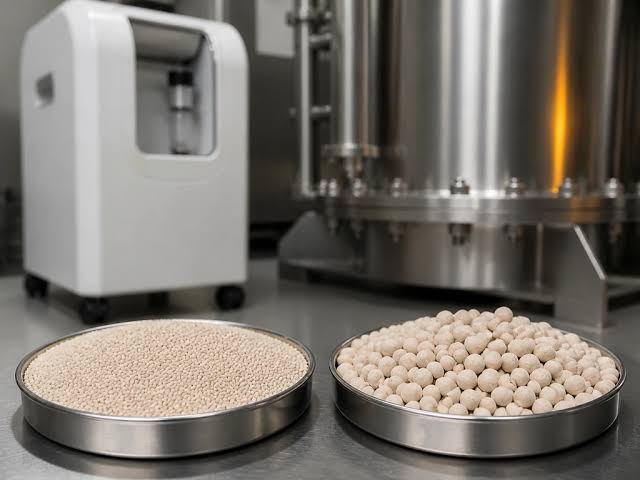
Lithium-exchanged zeolites can exhibit strong nitrogen adsorption because the lithium cations interact with the electric quadrupole moment of nitrogen molecules. This interaction contributes to the material's adsorption selectivity.
The resulting adsorption behavior can provide advantages in oxygen PSA systems, including high productivity and potentially lower adsorbent requirements for a given separation duty.
However, actual performance depends on more than the adsorbent alone. Feed-air quality, pressure conditions, cycle timing, vessel design, temperature, and product-purity targets all affect the final result.
For this reason, lithium molecular sieve selection should be based on verified performance under representative operating conditions rather than a single adsorption-capacity value.
Lithium molecular sieves are primarily used in gas separation processes where selective adsorption, rapid cycling, and reliable regeneration are important.
Oxygen generation is one of the most important applications of lithium molecular sieves.
In PSA oxygen generators, the adsorbent selectively removes nitrogen from compressed air, producing an oxygen-enriched gas stream. Lithium-based adsorbents can help improve productivity and support the design of compact oxygen generation equipment.
Typical application areas include:
Industrial oxygen generation
Medical oxygen generation systems designed for applicable standards
Oxygen supply for wastewater treatment
Metal processing and combustion applications
Aquaculture and water oxygenation
Chemical and industrial process support
The required oxygen concentration, flow rate, operating pressure, and applicable product standards vary by application. Medical use requires particular attention to equipment certification, product quality, monitoring, and regulatory compliance.
Industrial gas separation systems must often balance product purity, recovery rate, throughput, and energy consumption.
Lithium molecular sieves can be used in appropriately designed adsorption systems to support selective gas separation. Their suitability depends on the target gas mixture, the adsorbent's selectivity, and the process conditions.
For applications involving nitrogen removal from air, lithium-based zeolites are particularly relevant. For other gas mixtures, different adsorbents or separation technologies may be more appropriate.
Wastewater treatment facilities use oxygen to support biological processes that break down organic pollutants.
PSA oxygen generation systems can produce oxygen-enriched gas on site, potentially reducing dependence on delivered oxygen in suitable installations.
Lithium molecular sieves can contribute to the performance of these systems by supporting efficient nitrogen adsorption. Their effectiveness in a particular plant depends on the generator design, required oxygen delivery rate, operating schedule, and maintenance conditions.
Aquaculture operations often need reliable oxygen delivery to maintain suitable dissolved oxygen levels in water.
On-site oxygen generation can be useful in facilities that require a consistent oxygen supply. A lithium molecular sieve may serve as the adsorbent in the oxygen generator, helping separate nitrogen from compressed air.
System sizing should consider the stocking density, water temperature, oxygen demand, aeration or oxygen-transfer equipment, and required dissolved oxygen level.
Some chemical and manufacturing operations use oxygen-enriched gas for oxidation, combustion, or other process requirements.
PSA oxygen generators using lithium molecular sieves may be suitable where on-site generation is technically and economically appropriate.
Before selecting an adsorbent, engineers should evaluate the required gas purity, flow stability, operating environment, contaminant exposure, and process safety requirements.

Not all molecular sieves have the same adsorption characteristics. Different zeolite structures, cations, and pore properties make different products suitable for different separation and drying applications.
Lithium molecular sieves are often compared with sodium-based X-type zeolites used in oxygen PSA systems. The most important differences relate to adsorption selectivity, nitrogen working capacity, productivity, and operating performance.
| Comparison Factor | Lithium Molecular Sieve | Sodium-Based X-Type Zeolite |
|---|---|---|
| Typical role | High-performance adsorbent for oxygen PSA | Adsorbent for oxygen PSA and other suitable gas-separation applications |
| Cation type | Lithium-containing exchange sites | Sodium-containing exchange sites |
| Nitrogen adsorption | Can provide strong nitrogen adsorption and selectivity | Performance depends on zeolite formulation and operating conditions |
| Oxygen generation | Commonly used in advanced oxygen PSA systems | Used in various oxygen PSA system designs |
| Productivity | May support higher productivity in suitable systems | Depends on adsorbent properties and system configuration |
| Adsorbent requirement | May reduce required adsorbent quantity in some designs | Depends on capacity, cycle conditions, and design targets |
| Cost | Lithium-containing materials may have a higher purchase price | May offer a different cost-performance balance |
| Selection criteria | Productivity, purity, working capacity, and lifecycle cost | Adsorption performance, system compatibility, and lifecycle cost |
Important: This table describes general tendencies rather than universal performance guarantees. The actual difference between two adsorbents must be established using comparable test conditions and application-specific performance data.
The term 13X molecular sieve generally refers to an X-type zeolite adsorbent, commonly sodium-form zeolite, used for applications such as drying, carbon dioxide removal, and selected gas-separation processes.
Lithium-exchanged X-type zeolites have different adsorption characteristics because replacing sodium cations with lithium cations changes the interactions between the adsorbent and gas molecules.
In practice, the correct choice depends on the separation objective:
For oxygen generation through preferential nitrogen adsorption, lithium-based adsorbents may offer advantages in suitably designed PSA systems.
For air drying and carbon dioxide removal, conventional 13X or other appropriate molecular sieves may be more suitable.
For moisture removal from gases or liquids, the choice should be based on water adsorption requirements, regeneration conditions, and compatibility with the process.
A lithium molecular sieve should not automatically be considered a direct replacement for every conventional 13X molecular sieve. Product formulations and intended applications must be checked carefully.
The performance of a lithium molecular sieve is determined by its material properties, manufacturing quality, and operating environment. Understanding these factors helps equipment manufacturers select an appropriate adsorbent for their gas separation systems.
Lithium exchange level refers to the extent to which lithium ions replace other cations in the zeolite structure.
In lithium-exchanged X-type zeolites, the exchange level can significantly influence nitrogen adsorption selectivity and capacity. An appropriately engineered material can improve the balance between adsorption performance and regeneration requirements.
However, a higher lithium exchange level does not automatically guarantee better performance under every operating condition. Crystal structure, residual cations, activation, and adsorption kinetics must also be considered.
When comparing suppliers, buyers should request reliable product specifications and performance data rather than relying exclusively on the lithium exchange percentage.
Nitrogen adsorption capacity is one of the most important parameters for lithium molecular sieves used in oxygen PSA systems.
A material with suitable nitrogen adsorption capacity can remove more nitrogen during each adsorption cycle, potentially improving oxygen production efficiency.
However, equilibrium adsorption capacity and dynamic working capacity are not the same.
Equilibrium adsorption capacity describes the amount of gas adsorbed under specified equilibrium conditions. Dynamic working capacity refers to the amount of gas that can be adsorbed and subsequently released during actual operating cycles.
For PSA applications, dynamic working capacity under representative pressure, temperature, and cycle conditions is particularly important.
PSA systems operate through repeated pressurization, adsorption, depressurization, and regeneration.
A lithium molecular sieve with favorable adsorption kinetics can help the system complete these steps efficiently within relatively short cycle times.
Rapid adsorption can improve nitrogen removal during the adsorption phase, while effective desorption helps restore adsorption sites during regeneration.
Particle size, pore accessibility, pellet structure, and manufacturing consistency all influence these characteristics.
Molecular sieve particles are exposed to pressure changes, gas flow, and mechanical stress during normal operation.
Low mechanical strength may lead to particle breakage, dust formation, increased pressure drop, and reduced system performance.
High-quality lithium molecular sieves should therefore provide suitable crushing strength and resistance to attrition.
Manufacturers should evaluate these properties alongside adsorption performance, especially when the material will be used in equipment with frequent pressure cycles.
Water vapor, oil aerosols, and other contaminants can adversely affect the performance and service life of adsorption materials.
Lithium molecular sieves must be protected from unnecessary moisture exposure during storage, transportation, loading, and operation.
PSA oxygen generation systems generally require effective compressed-air pretreatment. Depending on the equipment design, this may include filtration, cooling, moisture separation, and dedicated drying stages.
Proper pretreatment helps protect the adsorbent and maintain stable operating performance.

Selecting the right lithium molecular sieve requires evaluating both the adsorbent and the equipment in which it will operate.
A product with excellent laboratory adsorption results may not deliver the expected performance if it is incompatible with the system's pressure, cycle time, or operating conditions.
The following factors should be considered before purchasing.
First, determine the intended application.
For example, an oxygen PSA generator requires an adsorbent that supports selective nitrogen adsorption and effective regeneration. Other gas separation processes may require different adsorption characteristics.
Clarify whether the application involves industrial oxygen production, wastewater treatment, aquaculture, medical oxygen equipment, or another process.
The intended use determines the required product specifications and performance criteria.
For oxygen PSA systems, product purity and flow rate are essential selection parameters.
A higher oxygen purity target may affect oxygen recovery, production capacity, cycle conditions, and energy consumption.
Similarly, a system designed for a large continuous oxygen demand may require a different adsorbent quantity and vessel configuration from a small oxygen generator.
Ask the supplier to provide performance data at the required oxygen purity, product flow rate, and operating conditions.
Particle size influences gas flow, pressure drop, and mass-transfer behavior.
Smaller particles may offer favorable mass-transfer characteristics but can increase pressure drop. Larger particles may reduce pressure drop but can affect adsorption kinetics.
The optimal particle size depends on the vessel design, gas velocity, cycle time, and required separation performance.
Crushing strength and attrition resistance should also meet the equipment manufacturer's requirements.
When comparing lithium molecular sieve products, request data that reflects actual operating conditions.
Relevant information may include:
Nitrogen adsorption isotherms
Dynamic working capacity
Adsorption and desorption kinetics
Particle size distribution
Bulk density
Crushing strength
Attrition resistance
Moisture content
Performance under specified PSA cycle conditions
Not every supplier will provide all these parameters in the same format. For a meaningful comparison, confirm the test method, temperature, pressure, and other relevant conditions.
The lowest purchase price does not necessarily produce the lowest operating cost.
A lithium molecular sieve with higher initial cost may offer economic benefits if it improves productivity, reduces the adsorbent quantity required, or helps lower energy consumption in a compatible system.
A useful purchasing evaluation should consider:
Initial adsorbent cost.
Required loading quantity.
Oxygen production capacity.
Energy consumption at the target operating conditions.
Adsorbent replacement interval.
Maintenance and downtime costs.
Product consistency and technical support.
The best choice is the material that provides the most suitable balance of performance, reliability, and lifecycle cost.
Proper storage and handling are essential to preserve the performance of lithium molecular sieves before installation.
Because zeolite adsorbents can interact strongly with water vapor, exposure to humid air may affect their initial adsorption performance.
Keep the packaging sealed. Store the material in its original moisture-resistant packaging until it is ready for use.
Store it in a dry environment. Avoid prolonged exposure to high humidity, rain, or direct water contact.
Prevent package damage. Damaged containers can allow moisture and contaminants to enter the product.
Minimize unnecessary exposure during loading. Follow the equipment manufacturer's loading instructions and limit the time that the material remains exposed to ambient air.
Follow the recommended activation procedure. If activation or conditioning is required, use the specified temperature, gas flow, pressure, and duration. Avoid applying generic regeneration conditions without checking the product's technical documentation.
Follow appropriate safety procedures. Use suitable protective equipment and follow the safety data sheet when handling adsorbent dust or performing equipment maintenance.
Good storage and handling practices help ensure that the adsorbent performs as intended when the system starts operating.
The quality of a lithium molecular sieve directly influences its suitability for demanding gas separation applications.
Differences in crystal structure, ion-exchange characteristics, particle strength, and manufacturing consistency can lead to different adsorption and operating behaviors.
For equipment manufacturers, inconsistent adsorbent performance may make it difficult to maintain stable product purity, production capacity, and operating efficiency.
A reliable supplier should provide clear technical documentation, consistent product specifications, suitable packaging, and application-oriented support.
When evaluating a lithium molecular sieve manufacturer, consider the following:
Consistency between production batches.
Documented adsorption and physical-property test results.
Quality-control procedures.
Packaging designed to limit moisture exposure.
Product traceability.
Technical assistance for application evaluation.
Availability of samples for qualification testing.
Experience supplying adsorbents for the intended application.
Where possible, evaluate samples using representative operating conditions before making a large purchase.
For B2B buyers, verified operating performance and consistent quality are more valuable than unsupported claims of superior adsorption capacity.
Lithium molecular sieves are primarily used as selective adsorbents in gas separation processes. Their best-known application is oxygen generation through pressure swing adsorption, where they preferentially adsorb nitrogen from compressed air to produce an oxygen-enriched gas stream.
Other potential applications depend on the specific adsorbent formulation and process requirements.
A lithium molecular sieve produces oxygen-enriched gas by preferentially adsorbing nitrogen from compressed air.
In an oxygen PSA system, air passes through an adsorbent bed under pressure. Nitrogen is retained more strongly than oxygen under suitable operating conditions. The oxygen-enriched gas exits the bed, and the adsorbent is regenerated by reducing pressure.
The process repeats through alternating adsorption and regeneration cycles.
Lithium molecular sieves typically contain lithium-exchanged zeolite structures, while conventional 13X molecular sieves commonly use sodium-form X-type zeolites.
The different cations affect adsorption behavior and selectivity. Lithium-exchanged X-type zeolites are widely used in advanced oxygen PSA systems because of their nitrogen adsorption characteristics.
Conventional 13X materials are also widely used for drying, carbon dioxide removal, and other adsorption applications. The appropriate choice depends on the intended separation process.
Lithium molecular sieves can provide strong nitrogen adsorption selectivity and favorable dynamic performance.
These characteristics may help oxygen PSA systems achieve high productivity and efficient gas separation. Actual performance depends on the adsorbent formulation, system configuration, feed-air quality, and operating conditions.
The service life of a lithium molecular sieve depends on its initial quality, operating conditions, contamination exposure, moisture management, and the frequency of pressure cycles.
There is no single service-life value that applies to every installation. Excessive moisture, oil contamination, mechanical degradation, and improper regeneration can shorten service life.
Regularly monitoring oxygen purity, production flow, pressure drop, and operating conditions can help identify performance deterioration.
Replacement decisions should be based on equipment requirements and technical evaluation rather than an assumed universal lifespan.
The most important factors include lithium exchange level, nitrogen adsorption capacity, adsorption kinetics, particle size, mechanical strength, operating pressure, temperature, cycle timing, and feed-air quality.
Moisture and oil contamination can also adversely affect performance.
For accurate product comparisons, use test results obtained under comparable conditions.
Yes. In oxygen PSA applications, lithium molecular sieves are regenerated by reducing the pressure in the adsorbent bed, allowing adsorbed nitrogen to be released.
Some systems use additional purge gas or pressure equalization to improve regeneration efficiency.
The regeneration procedure must be compatible with the adsorbent and the equipment design.
Store lithium molecular sieves in sealed, moisture-resistant packaging in a dry environment.
Avoid direct contact with water and unnecessary exposure to humid air. Open the packaging only when the material is ready for loading, and follow the manufacturer's instructions for activation and handling.
Compare technical specifications, adsorption performance, mechanical strength, batch consistency, packaging, quality documentation, and technical support.
For oxygen PSA applications, request performance data relevant to your target oxygen purity, flow rate, and operating conditions.
Sample testing and a technical review can help determine whether a product is suitable for your equipment.
No. Lithium molecular sieves are specialized adsorbents, and their suitability depends on the gas mixture and separation objective.
They are particularly important in oxygen PSA applications, but other processes may require different zeolites, activated alumina, activated carbon, membranes, or alternative separation technologies.
The adsorbent should be selected according to verified process requirements.
Lithium molecular sieve is an important adsorbent for modern gas separation technology, particularly pressure swing adsorption oxygen generation.
Its lithium-exchanged zeolite structure can provide strong nitrogen adsorption selectivity, supporting efficient oxygen enrichment in appropriately designed systems.
The principal advantages include favorable adsorption characteristics, the potential for high productivity, and compatibility with cyclic adsorption and regeneration processes.
However, overall system performance depends on the interaction between adsorbent quality, equipment design, operating conditions, and feed-air pretreatment.
For manufacturers of oxygen generators and industrial gas separation equipment, selecting the right lithium molecular sieve requires more than comparing purchase prices or isolated laboratory data.
By evaluating dynamic adsorption performance, mechanical properties, product consistency, moisture management, and lifecycle cost, buyers can make more informed purchasing decisions.
If you are sourcing lithium molecular sieve for an oxygen PSA generator or an industrial gas separation project, compare technical specifications and request application-specific performance data before selecting a supplier.


 Tracy Chen